

Go back
CertifiedEducation quality
12/2025

Read & Play
Milton Education
English language learning
Age groups
Elementary
Middle school
High School
Price
One time purchase
Languages
English
Platform
Browser-based
Desktop Windows
Desktop Mac
Mobile Android
Mobile iOS
Registration
Required
Offline play
Internet required
Price
One time purchase
The pedagogical analysis covers how the product supports learning of the identified skills. The student’s role is assessed by four contrary pair parameters, which are selected to cover the most essential aspects on the use of the product.
The following are the high educational quality aspects in this product.
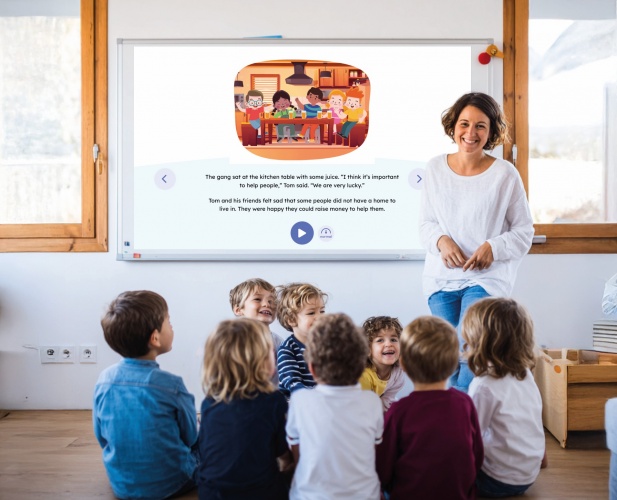
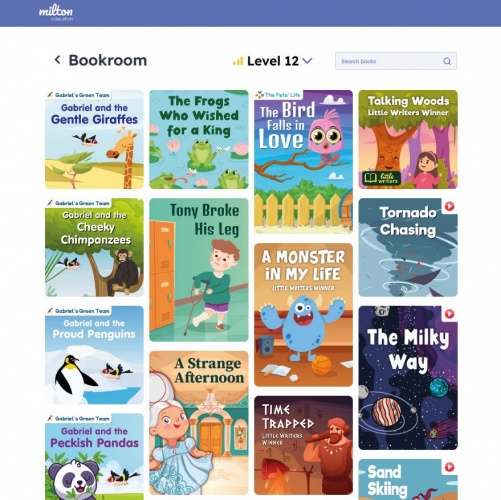
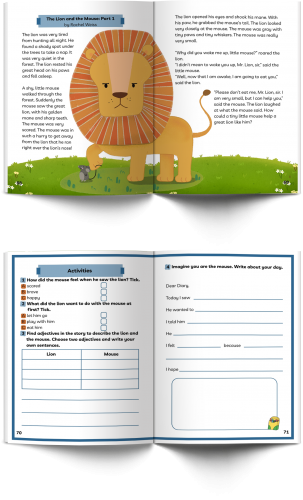
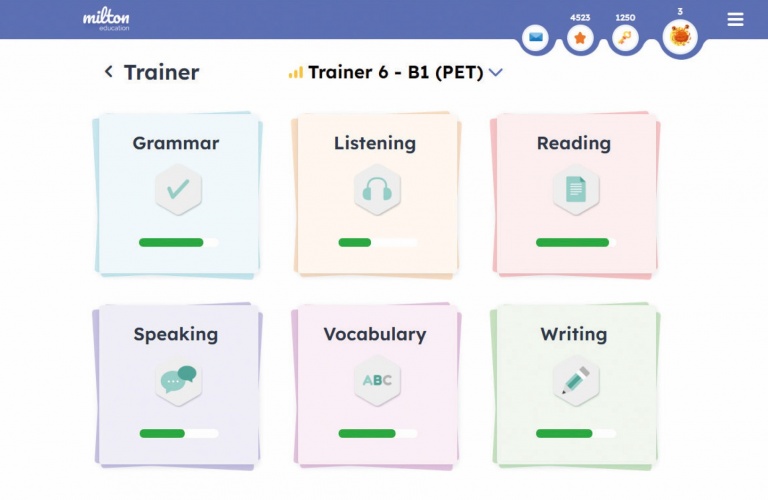
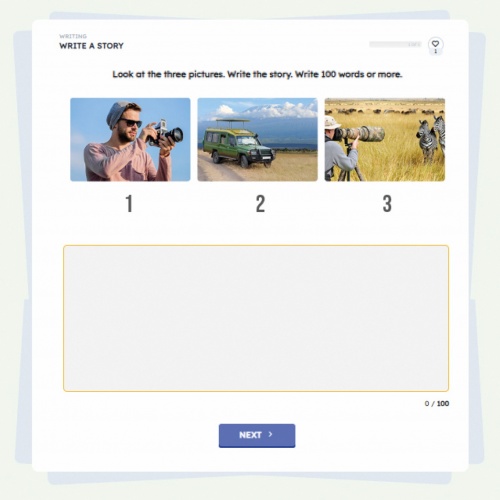
Read & Play offers young learners a diverse and engaging way to practise English through creative tasks, interactive exercises, and skill-building activities that support language development.
Engaging gamification & fun visuals
The supported learning goals are identified by matching the product with several relevant curricula descriptions on this subject area. The soft skills are definitions of learning goals most relevant for the 21st century. They are formed by taking a reference from different definitions of 21st century skills and Finnish curriculum.
Subject based learning goals
Can scan longer texts in order to locate desired information, and gather information from different parts of a text, or from different texts in order to fulfil a specific task.
Can understand the description of events, feelings and wishes in personal letters well enough to correspond regularly with a pen friend
Can read straightforward factual texts on subjects related to his/her field and interest with a satisfactory level of comprehension.
Can understand short, simple texts containing the highest frequency vocabulary, including a proportion of shared international vocabulary items.
Can understand short, simple texts on familiar matters of a concrete type which consist of high frequency everyday or job-related language
Can write short, simple essays on topics of interest.
Can narrate a story.
Can write about everyday aspects of his environment e.g. people, places, a job or study experience in linked sentences.
Can convey information and ideas on abstract as well as concrete topics, check information and ask about or explain problems with reasonable precision.
Can take messages communicating enquiries, explaining problems.
Can write personal letters describing experiences, feelings and events in some detail.
Can write personal letters giving news and expressing thoughts about abstract or cultural topics such as music, films
Can give or seek personal views and opinions in discussing topics of interest.
Can follow clearly articulated speech directed at him/her in everyday conversation, though will sometimes have to ask for repetition of particular words and phrases.
Can discuss what to do in the evening, at the weekend.
Can say what he/she likes and dislikes.
Can use simple everyday polite forms of greeting and address
Can generally understand clear, standard speech on familiar matters directed at him/her, provided he/she can ask for repetition or reformulation from time to time.
Uses some simple structures correctly, but still systematically makes basic mistakes - for example tends to mix up tenses and forget to mark agreement; nevertheless, it is usually clear what he/she is trying to say.
Can understand basic types of standard routine letters and faxes (enquiries, orders, letters of confirmation etc.) on familiar topics
Can understand simple technical information, such as operating instructions for everyday equipment.
Can follow a lecture or talk within his/her own field, provided the subject matter is familiar and the presentation straightforward and clearly structured.
Can generally follow the main points of extended discussion around him/her, provided speech is clearly articulated in standard dialect.
Can catch the main point in short, clear, simple messages and announcement.
Pronunciation is clearly intelligible even if a foreign accent is sometimes evident and occasional mispronunciations occur.
Uses reasonably accurately a repertoire of frequently used "routines" and patterns associated with more predictable situations.
Has a sufficient vocabulary to express him/herself with some circumlocutions on most topics pertinent to his everyday life such as family, hobbies and interests, work, travel, and current events.
Can write with reasonable phonetic accuracy (but not necessarily fully standard spelling) short words that are in his/her oral vocabulary.
Soft skills learning goals
Encouraging to build new information and visions
Practicing to look things from different perspectives
Practicing to use imagination and to be innovative
Encouraging students to be innovative and express new ideas
Learning to find the joy of learning and new challenges
Practicing to evaluate one's own learning
Practicing to set one's own learning goals
Practicing to take responsibility of one's own learning
Practicing to find ways of working that are best for oneself
Practicing persistent working
Practicing to observe spoken and written language
Practicing memorizing skills
Practicing letters, alphabets and written language
Using technology as a part of explorative process
Using technology to express one’s emotions and experiences
Using technology for interaction and collaboration
Using technological resources for finding and applying information
Using technology as a part of explorative and creative process
Using technology resources for problem solving
Learning to plan and design own written content and textual representations
Learning the basics of spelling
Familiarizing with the influences of media and understanding its affordances
Learning to view and consider media and advertising critically
Practicing to find, evaluate and share information
Practicing to use information independently and interactively
Learning to understand and interpret diverse types of texts
Learning to understand and interpret diverse types of texts, from vernacular to academic
Practicing logical reasoning to understand and interpret information in different forms
Connecting subjects learned at school to skills needed at working life
Learning to use foreign language in work context
Practicing to give, get and reflect feedback
Practicing to express own thoughts and feelings
Practicing to use foreign language as a communication tool
Practicing communication through different channels
Practicing to argument clearly own opinions and reasonings
Learning about different countries and their characteristics
Learning about cultural aspects and to respect different cultures
Getting familiar with different cultures
Learning to understand people, surroundings and phenomenons around us
Learning to combine information to find new innovations
Learning to build information on top of previously learned
Encouraging the growth of positive self-image
Practicing creative thinking
Creating requirements for creative thinking
Practicing keyboard skills and touch typing
Learning to face failures and disappointments
Learning to acquire, modify and produce information in different forms
Realizing the connection between subjects learned in free time
and their impact to skills needed at worklife
Learning to recognise and evaluate arguments and their reasonings
Practicing versatile ways of working
Practicing decision making
Practicing time management
Encouraging positive attitude towards working life
Practicing to use imagination and to be innovative
Practising visual recognition
Practicing fine motor skills
Practicing to improvise
Understanding and practicing safe and responsible uses of technology
Practicing to plan and execute studies, make observations and measurements
Practicing to create questions and make justifiable arguments based on observations
Practicing to notice causal connections
Learning to find solutions in social conflicts
Developing problem solving skills
Learning to notice causal connections
Practicing strategic thinking
Practicing categorization and classification
Using technology for interaction and collaboration (also internationally)
Supporting student to build their own linguistic and cultural identity
Learning about different languages
Learning to face respectfully people and follow the good manners
Practicing to take care of own and other people’s safety
Practicing to take care of one's own and other people’s safety
Practicing to take care of one's own wellbeing and health
Supporting the growth of environmental awareness
Understanding technological system operations through making
Building common knowledge of technological solutions and their meaning in everyday life
Practising to understand visual concepts and shapes and observe their qualities
Understanding concepts of music and familiarizing with different notations
Experiencing and exploring sounds and music from different sources
Learning to plan and organize work processes
Learning to understand the meaning of rules, contracts and trust
Learning to listen other people’s opinions
Practicing to work with others
User reviews for Read & Play
You need to log in to post a review.